


On this page
Is husky safari ethical? It can be, but the answer depends on the operator and how its dogs live, work and retire. A ride is only as good as the care behind it, and the good news is that you can check much of this yourself before and during your trip.
We run husky safaris from our safari house in the countryside near Rovaniemi, and we hear this question often. This guide explains what to look for, which questions to ask any operator, the warning signs to notice and what to choose if you decide huskies are not for you.
Is husky safari ethical? The honest answer
A husky safari is not automatically cruel and not automatically fine. The ethical question is about everything around the time the dogs spend on the trail:
- How the dogs live when they are not running.
- How much they work, and how much rest they get.
- Who looks after their health, and how quickly problems are treated.
- What happens to them outside the sledding season and when they are too old to pull.
Operators differ, so it is worth asking questions rather than assuming. A responsible operator will welcome them.
Are husky rides cruel? The questions travellers raise
Responsible travellers tend to raise the same welfare questions about husky tourism. Knowing them helps you decide what to ask.
- Kennel life. How are the dogs housed between runs, and do they get enough exercise and social contact?
- Workload. How many runs does each dog do in a day, and how is rest organised?
- The off-season. What does the dogs’ life look like in the months without snow?
- Retirement. What happens when an older dog stops running?
None of these questions means you should never go on a husky safari. They mean you should choose your operator carefully.
What a responsible husky operator should show you
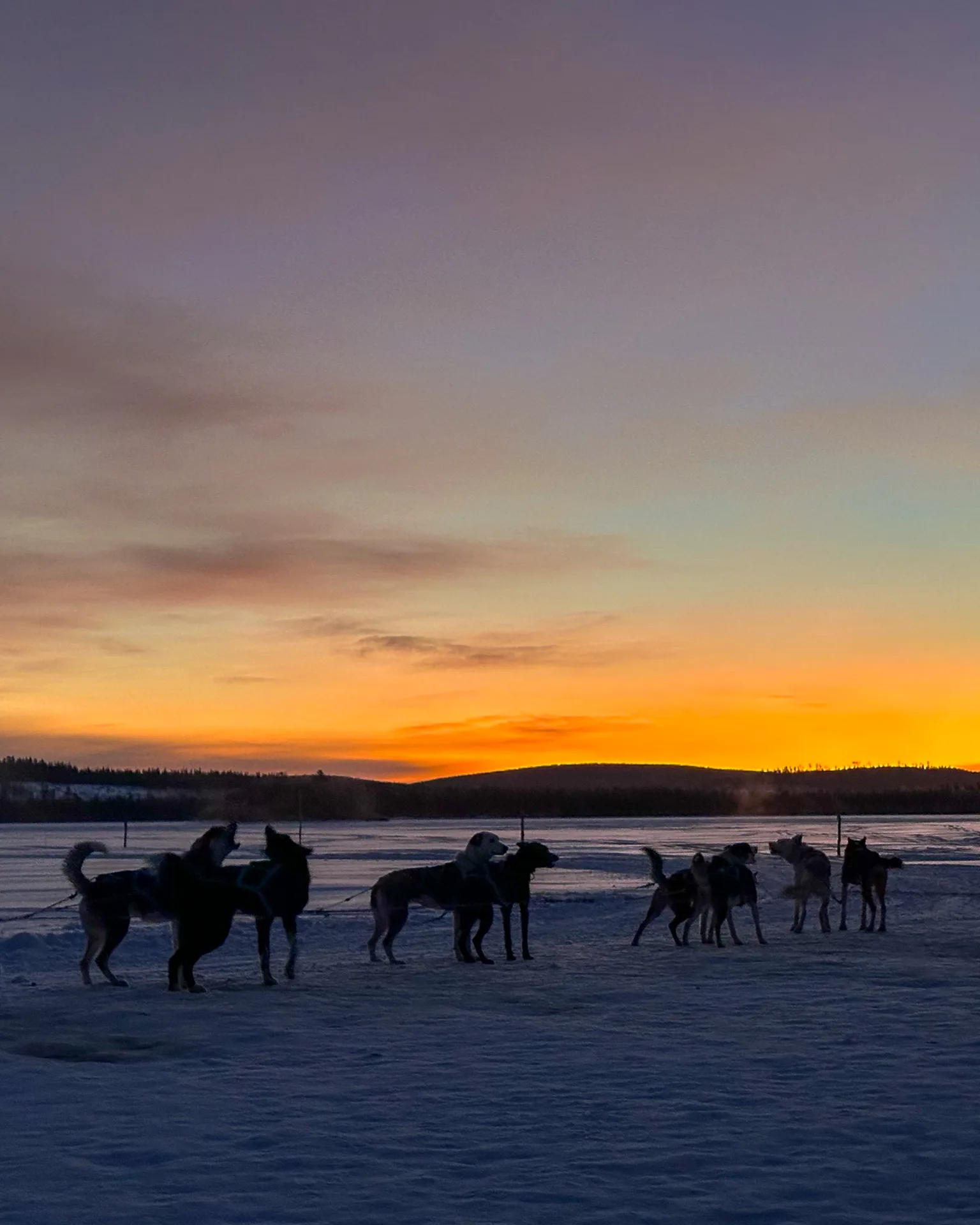
You do not need to be a vet to form a view. A responsible operator is open about how its dogs live and is happy to talk about it. Look for these things:
- Openness about where the dogs live. Clean, dry resting places with shelter are what you would hope to hear about or see.
- Dogs that look well. Fearful, withdrawn or limping dogs are a reason to ask questions.
- Guides who know the dogs. People who handle the dogs should be able to tell you about them.
- Rest built into the day. Ask how many runs a dog does in a day and how rest is organised. A clear answer is a good sign.
- A plan for the whole year. The operator should be able to explain how the dogs are kept active outside the sledding season.
- A plan for older dogs. Ask what happens when a dog retires and expect a direct answer.
You can read more about choosing a husky trip in our guide to the best husky ride in Rovaniemi, and see our options on the husky safaris page.
Husky Safari into the Arctic Wilderness – approximately 45–60 minutes of husky sledding through the forest, a kota break with a hot drink and time feeding our reindeer. From 199 € · hotel pickup included.
Questions to ask before you book
You can ask these by email before booking or in person on the day. The answers tell you more than any marketing photo.
| Question | Why ask it | A good answer sounds like |
|---|---|---|
| Where do the dogs live? | It is where they spend their time between runs | A clear explanation of housing and shelter |
| How many runs does each dog do per day? | Shows how rest is planned | A specific answer, not “as many as needed” |
| Who checks the dogs’ health? | Problems need fast attention | Named routines and veterinary contact |
| What do the dogs do in summer? | Their care continues all year | A concrete off-season plan |
| What happens when a dog retires? | Shows long-term responsibility | An open, specific answer |
| How do you adapt to difficult conditions? | Dogs should come before the schedule | A clear explanation of how runs are adjusted |
If an operator avoids these questions or gives vague answers, take that as information and think again.
Signs to notice on the day
Good signs
- Guides speak calmly to the dogs and handle them gently.
- Dogs look keen before the run and relaxed when they stop.
- The guide introduces the dogs and explains how to behave around them.
- Your questions about the dogs get straight answers.
Red flags
- Shouting, rough handling or hitting dogs.
- Thin, limping or visibly injured dogs in harness.
- Dogs kept in dirty, wet or cramped conditions.
- Teams that seem to be sent out again and again without a break.
If you see something that worries you, mention it to the operator and, if you believe animals are in danger, report it to the local animal welfare authorities. Your feedback and reviews also help other travellers choose well.
Husky welfare in Lapland: trip length, group size and season
How a safari is designed is worth asking about as much as how the kennel is run.
- Trip length. Ask how long the ride is and whether there is a planned break. Our guide to the difference between a husky ride and a husky safari explains what to compare.
- Group size. Ask how many guests travel with each guide. Our tours run in small groups, with a maximum of around 8 guests per guide.
- Conditions. Ask how the operator adapts runs to the weather and the state of the trail.
- Season. Ask what happens to the dogs outside the sledding season.
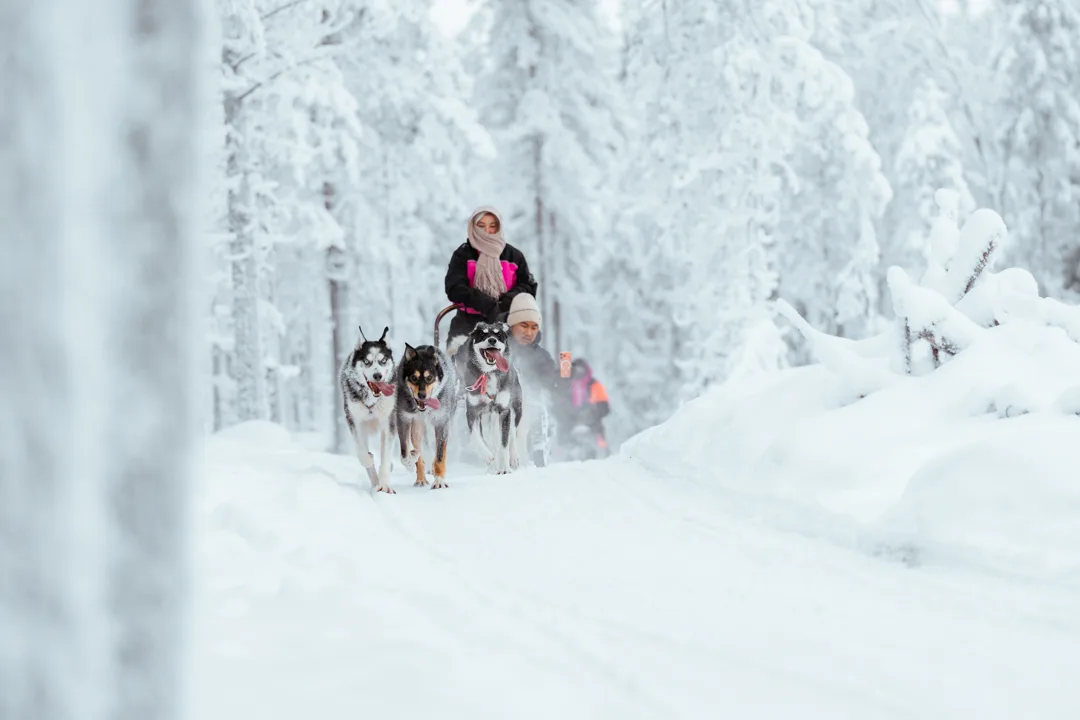
On our Husky Safari into the Arctic Wilderness, the husky sledding lasts approximately 45–60 minutes through the forest, with a stop around halfway at a traditional Finnish kota for a hot drink and small snack by the fire. Your guide introduces the huskies before the ride.
Husky safari sustainability beyond the dogs
Ethics is not only about the dogs. When you choose a husky safari, it is also worth thinking about:
- Who you support. Find out who runs the business. We are two small entrepreneur families from a little village near Rovaniemi.
- Where the trail goes. Ask where the ride takes you. Ours goes through the forest around our safari house in the countryside.
- Other animals. Reindeer and other wildlife may be seen in the forest; enjoy them quietly and keep your distance.
- Your transport. Hotel pickup within 10 km of Rovaniemi city centre is included on our tours, so you do not need a hire car.
For broader advice on travelling in the region, the Visit Finland guide to Lapland is a useful official source.
Our approach at Snowtrail
We are two small entrepreneur families, and our guests meet our animals up close: your guide introduces the huskies before the ride, and at the safari house you can meet and feed our reindeer. We think the best way to answer the ethics question is to invite you to ask us whatever you like.
If you want to know more about how our dogs are cared for before you book, send us your questions. We reply fast, usually the same day.
Husky Adventure to Santa's Hidden Cabin – a husky ride through the forest to a private meeting with Santa, with hot glögi, traditional snacks and our reindeer. From 249 € · hotel pickup included.
Not sure about huskies? Animal-free alternatives
If you have thought it through and still feel uneasy, that is a perfectly valid choice. You can enjoy the winter in other ways:
- Electric reindeer safari: you drive a near-silent, fume-free electric sled on guide-led trails, then meet real reindeer. Nothing is pulled by animals. See our electric reindeer safaris.
- Snowmobile sleigh ride: sit in a sleigh towed by a snowmobile; like all our tours, it is suitable from age 3.
- Northern lights evening: a warm fire, hot drinks and light Finnish snacks at our Aurora Cabin, with no animals pulling anything.
Good to know
- Ask first: a responsible operator will answer welfare questions before you book.
- Trip design matters: ask about group size, ride length and breaks.
- Our safari: approximately 45–60 minutes of husky sledding, a kota break and reindeer at the safari house.
- Introduction: your guide introduces the huskies before the ride.
- Cancellation: free up to 24 hours before departure.
Frequently asked questions
Are husky safaris in Finland cruel?
Not by definition, but standards vary between operators. Choose one that answers welfare questions openly and runs small groups.
How can I tell if a husky farm treats its dogs well?
Look at the dogs’ condition and how guides handle them. Ask about daily workloads, health checks, summer care and retirement, and expect clear answers.
How long is the husky ride on your safari?
On the Husky Safari into the Arctic Wilderness, the husky sledding lasts approximately 45–60 minutes, with a kota stop around halfway. The whole tour takes 4 hours.
Can I ask about your dogs before booking?
Yes. Send your questions through our contact page and we will reply, usually the same day.
What if I see a dog that looks unwell?
Tell the guide straight away. If you believe animals are being mistreated anywhere, report it to the local animal welfare authorities.
Are there husky-free alternatives?
Yes. Our Electric Reindeer safaris, snowmobile sleigh rides and northern lights evenings at the Aurora Cabin involve no sled dogs at all.
Choosing with care is the most ethical thing you can do. Ask questions, look at how the dogs are handled and pick a small-group safari you feel good about. If you would like to talk about our huskies before booking, we are always happy to hear from you.